The food you eat, your physical activity, and the medications you take all impact your blood glucose (blood sugar) levels. These are also parts of your diabetes treatment plan, which should be created with your doctor and the rest of your health care team. This plan should include:
- Monitoring your blood glucose levels: Talk to your doctor about the best way to check them and how often to check.
- An eating plan: Talk to your registered dietitian nutritionist (RDN) about creating an eating plan that works with your needs and will help you reach your goals. The Diabetes Plate is a great place to start.
- Physical activity: Talk to your health care team about how to stay active. Aim for 150 minutes of physical activity each week.
- Medications: Work with your doctor to learn which medications will work for your health goals.
Talk with your health care team about if these parts of your diabetes treatment plan need to be changed because of your blood glucose levels. If it does, talk about when and how to change them.
Knowing what factors affect your blood glucose is one piece of the diabetes management puzzle. When you first start monitoring your blood glucose, it can be hard to know how and what will cause your blood glucose to go too high (hyperglycemia) or too low (hypoglycemia). Over time, you can start to get an idea of what leads to your readings and how to avoid high and low blood glucose. Read on to learn the basics of what affects your blood glucose and make decisions to improve your health.
Understanding What Affects Your Blood Glucose
The way you’ll find out what may be affecting your blood glucose is by monitoring it over time. This can be done with a blood glucose meter (BGM) or continuous glucose monitor (CGM). A BGM will tell you what your blood glucose at any given time. A CGM provides glucose readings 24/7 and shows if your glucose is trending up or down so you know if your blood glucose is at risk of going too high or low. Thinking about what’s affecting your trends makes it easier to learn how different factors affect your blood glucose.
Checking your blood glucose also not only gives you information about what your blood glucose level is but monitoring those checks over time gives you information about the factors affecting it. You’ll have an idea of how foods, activity, stress, illness, and other factors played a part in your current blood glucose level. Checking once doesn’t give much information, but over time, you’ll start to notice how different factors have led to your results.
Looking at Trends
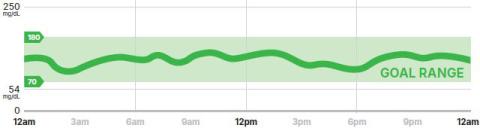
Day to day, your goal is to manage your blood glucose to keep it in your target range (70–180 mg/dL for most people). Your glucose trends within your target range might look like this on a CGM:
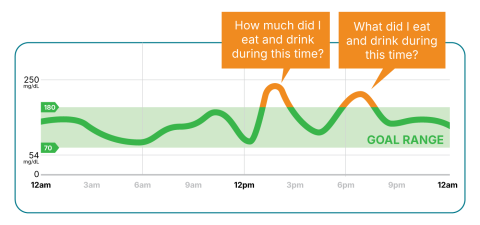
When your blood glucose is trending higher or lower than you expect or your trends go outside your target range, think about what might have affected them. Here’s an example of glucose peaking higher than your target range on a CGM:
What to Do After Checking Your Blood Glucose
After checking your blood glucose, you can ask yourself some questions to figure out what factors have the biggest effect on your blood glucose levels during the day. Try the following the next time your blood glucose goes out of your target range:
- Did something happen with my medication?
- Did I take it at the right time?
- Did I take the right amount?
- Could something have changed how effective it is?
- What and how much did I eat?
- Did my plate look like the Diabetes Plate? If not, what was the difference?
- What kind of carbs did I eat? Were the carbs simple, like added sugar, or complex, like those with fiber or whole grains?
- Did I eat earlier or later than expected? Did I miss a meal or snack?
- Was my blood glucose trending up or down before I ate?
- Could the food I ate earlier have affected my blood glucose?
- How active have I been?
- Was my exercise more or less intense than usual?
- Did I exercise for a longer or shorter period of time?
- Did I do more or less physical activity during the day?
- Am I drinking enough water?
- Am I more stressed or dealing with more emotionally challenging situations than usual?
- Have I been getting enough restful sleep?
- Am I sick or dealing with something causing ongoing pain like muscle strain or a sunburn?
The answer to these questions can help you understand what may have affected your glucose levels. Over time, as you get used to how your body reacts to different situations, food, and activity, you’ll be able to predict what your blood glucose trends will look like and it will be easier to pinpoint what affected them.
How Foods or Meals Impact Your Blood Glucose
Along with looking at trends day to day and understanding what’s affecting them, you can also use trends to see how specific foods or meals raise your blood glucose levels. This will make your blood glucose levels easier to predict and make decisions to avoid going above or below your target range. In addition to the food you’re eating, keep in mind that your activity during the day, illness, and stress will all affect your blood glucose levels, too.
Checking how foods or meals affect your blood glucose:
- Pick a specific meal or food. This works best for foods or meals that you’ve measured the portions of, are packaged, or are from chain restaurants.
- Check your glucose before eating so you know where it started.
- Eat the food or meal (drink water or a zero-calorie beverage so your glucose is only affected by the food).
- Check your blood glucose again two hours after eating to see how your glucose was affected.
- Do this again on another day to see if you have similar results. Over time, you’ll have a good idea of what to expect from the food or meal.
Food affects your blood glucose based on various factors. Here are some tips:
- Simple carbs will affect your glucose quickly, which is why they’re used to treat low blood glucose (hypoglycemia).
- Complex and quality carbs like starchy vegetables, fruit, whole grains, and low-fat milk or plain yogurt will still raise your blood glucose, but it takes longer for them to do so.
- Protein, fat, and fiber all make foods take longer to affect your glucose. This is why chocolate isn’t used to treat low blood glucose.
- Alcoholic beverages can both raise your blood glucose from the carbs and lower your blood glucose well after you’ve stopped drinking. (This can last 24 hours or longer.)
- Be mindful of what you are drinking. Choose water or zero-calorie beverages when possible.
Informed food choices are key to living well with diabetes.
Learn More
How Activities Impact Your Blood Glucose
Similar to foods, you can check your blood glucose before, during, and after an activity to see how it affects your blood glucose. Usually, your blood glucose levels will go down because your body is using it for energy. This can last for about a day after exercising. If your activity is intense enough, your blood glucose may go up. Talk to your health care team about when to avoid physical activity if you are at risk of having high or low blood glucose.
What can make your blood glucose level go up?
Talk to your health care team to find out if you’re likely to have high blood glucose levels and if your plan needs to be adjusted if your levels are high often. If you’re at risk of severe hyperglycemia and diabetic ketoacidosis (DKA), ask about when you should test ketones as part of your plan. High blood glucose can be caused by:
- Too much food, like a meal or snack high in carbs or eating more carbs than usual.
- Not enough physical activity.
- Not taking enough insulin or other diabetes medications.
- Side effects from other medications, like steroids.
- Not staying hydrated.
- Hormones can raise blood glucose levels. Hormone changes can be caused by:
- Getting sick
- Stress
- Pain
- Menstrual cycle (this can also lead to lows)
What can make your blood glucose level go down?
If you take medications that put you at risk of low blood glucose, talk to your team about how to adjust your treatment plan and when. If you’re at risk of severe hypoglycemia, talk about getting a prescription for glucagon. The causes of hypoglycemia can include:
- Too little food, like eating a smaller portion (including when making healthy food choices), eating less than expected, and missing meals or snacks.
- When meals are delayed, depending on your medications.
- Too much insulin or other diabetes medications.
- Side effects from other medications.
- Alcohol, especially on an empty stomach. Low blood glucose can also happen many hours after alcohol use, so it’s very important to monitor your blood glucose closely.
- Menstrual cycle (this can also lead to high blood glucose).
- More physical activity or exercise than usual. Physical activity makes your body more sensitive to insulin and can lower blood glucose. This effect can continue for several hours.