Example of Using the Diabetes Plate to Make Changes to Meals
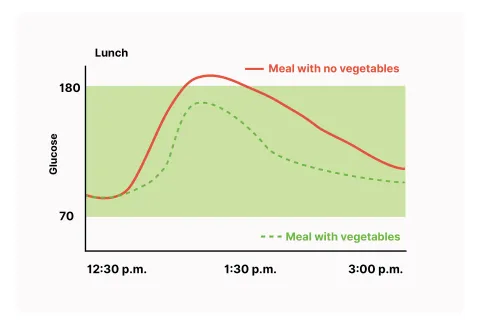
Maria usually has chicken thighs and white rice for lunch at noon. They each take up about half of her plate. Using her CGM, she notices that when she eats this for lunch, her glucose goes above her target range around 1:00 p.m.
Using the Diabetes Plate, Maria changes her portions so her rice fills a quarter of the plate and the chicken thighs fill another quarter of the plate. She also adds a green salad to half the plate. Her glucose still trends up after lunch, but she is not above her target range!
Physical Activity
Usually, when you’re physically active, you’ll see your glucose levels go down because it improves the way insulin works and your body is using glucose for energy. Because of this, physical activity can be a great way to help you stay in your target range and the benefits last long after you’re done.
If you’re having trouble keeping your blood glucose levels in your target range, you can try:
- Taking a walk before or after meals
- Moving more and sitting less throughout the day
- Getting about 30 minutes of physical activity five days a week (150 minutes total) and trying to make two of those sessions strength training
- Breaking up time not moving by getting up every 30 minutes
You can use your CGM to check your glucose before, during, and after an activity to see how it affects your glucose. Keep in mind that some activities like weightlifting or sprints cause your body to release stress hormones that can raise your glucose. Learning what types and what amount of physical activity affects your glucose can help you manage your diabetes.
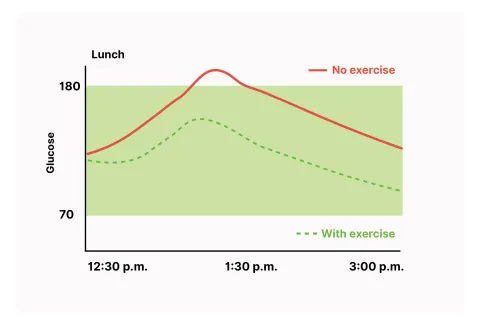
Example of Using a CGM to Understand the Impact of Activity
Sara looks at her CGM and notices that every day last week her glucose went slightly above her target range after eating lunch. She decides to try walking for 15 minutes after her lunch to see if it helps. The next week, she looks back, and while her glucose still goes up after lunch, it stays in her target range.
Medication
You can also use your CGM to work with your doctor to make decisions about your medications. By checking your daily glucose graphs, trend arrows, and time in range, you can see if and when you are going out of your target range. This can help you and your doctor decide if you should make changes to the amount or timing of the medication you’re taking. After a change, you can use your CGM’s readings to see how it worked.
Example of Using a CGM to Make Medication Decisions
Using her CGM, Jasmine notices that her fasting glucose levels have been creeping up, even though she hasn’t changed her eating plan or physical activity. She has been living with type 2 diabetes for 10 years now. Her doctor talks to her about adding a new medication, but Jasmine isn’t sure she wants to. Her doctor suggests they try it and see if it works to help her reach her fasting glucose target. After starting the new medication, Jasmine looks for trends and notices her fasting glucose levels return to her target range. She also sees her time in range increasing so she decides to stay on the new medication.