Treatment & Care

Using a CGM to Manage Diabetes

Factors like the food you eat, what you drink, how much and how often you get physical activity, and the medication(s) you take all impact your glucose levels. Using a continuous glucose monitor (CGM) can help you learn what’s impacting your glucose and manage diabetes.  

Factors That Impact Your Glucose Levels

Key points: 

  • Food, drink, exercise, medication, stress, sleep, and sickness can all impact your glucose readings.
  • Different kinds of foods, like carbs, protein, and fats, impact your glucose readings differently.
  • Using a CGM can give you insights into how eating different amounts and types of food and drink affect your glucose levels, helping you make changes to reach your targets.
  • The Diabetes Plate is a great place to start when planning meals.  

Using CGM Data to Make Changes

A CGM is a great tool for managing diabetes. It gives you glucose readings throughout the day, which allows you to learn about trends and patterns. You can use what you learn to start making small changes to see how they affect your time in range. Try different changes to find out what works best for you! 

 Here are some factors to keep in mind that may be impacting your glucose levels.  

How Nutrition Impacts Glucose Levels 

Using a CGM to Help Plan Meals 

There is no one diet or eating plan for diabetes that works for everyone. Healthy eating patterns that are proven to work for managing diabetes include: 

  • Mediterranean-style
  • Vegetarian or vegan
  • Low fat
  • Low carbohydrate
  • Very low carbohydrate
  • Dietary Approaches to Stop Hypertension (DASH)  

Work with your healthcare team to figure out what eating pattern may be best for you based on your needs and goals. When making changes to what you eat, you can use your CGM’s daily graph to see the impact day-to-day. Use the CGM’s time in range information to see how well your eating plan is working. 

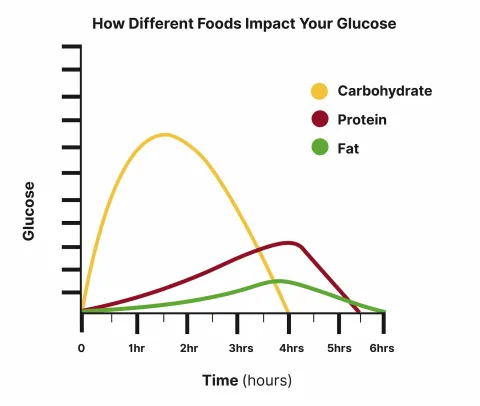
How Different Foods Can Impact Your Glucose

Image
Line graph: Carbohydrate causes rapid, high glucose spike; protein moderate; fat low over time.

 Explore below to see how different foods and beverages impact your glucose. 

Carbohydrates (carbs) raise your glucose the most, but some will raise it more than others. 

  • Simple carbs like candy, soda, and juice will raise your glucose the fastest. This makes them a good choice when your glucose is too low (hypoglycemia), but otherwise they can easily bring your glucose above your target range.
  • Quality carbs like starchy vegetables, beans, legumes, fruits, whole grains, low-fat milk, and plain yogurt will still raise your glucose, but it takes longer. This slower rise can help you stay in your target range.
  • Fiber is found in many quality carbs like starchy vegetables, beans, legumes, fruits, whole grains, nuts, and seeds. Non-starchy vegetables also contain fiber and, because they are low in carbohydrates, they won’t raise your glucose much. Fiber slows how quickly food impacts your glucose, which can help keep your levels in your target range.  

Protein and fat slow how quickly food impacts your glucose, which can help keep levels in your target range.  

  • Many foods contain protein, but lean sources of protein (such as lean meat, fish, low-fat cheese, and tofu) can help you stay healthy.
  • Fats can often be found in dressings, cooking oils, and condiments. Try to choose heart-healthy options that are lower in saturated fat, such as avocados, olive oil, canola oil, nuts, and seeds.  

Alcoholic drinks can raise your glucose at first due to their carbohydrate content but may also cause low glucose levels 24 hours or longer after drinking.  

  • If you choose to drink, limit alcohol to one drink per day for women and two drinks per day for men.  

Example of Using a CGM to Make Small Changes to Eating 

Peter loves to eat white toast with breakfast. He wants to learn more about how toast impacts his glucose levels. He checks his glucose level and trend arrow on his CGM and then eats three pieces of toast. Two hours later, he checks his glucose and trend arrow again and sees that it rose above his target range.  

The next day he tries two pieces of toast, and repeating his glucose checks, he sees that his glucose stays in his target range. He continues to check how the toast affects his glucose over the next few days, changing factors like the type of toast and what foods he eats with it. Using his CGM readings, he sees that he has the least rise in his glucose when he eats 100% whole grain toast with eggs and avocados.  

Simplified Meal Planning for Trying Small Changes 

The Diabetes Plate makes building balanced meals simple—no counting, calculating, weighing, or measuring. It guides portions and food choices, giving you a balance of protein, non-starchy veggies, and quality carbohydrate that will help you manage your glucose.  

Example of Using the Diabetes Plate to Make Changes to Meals 

Image
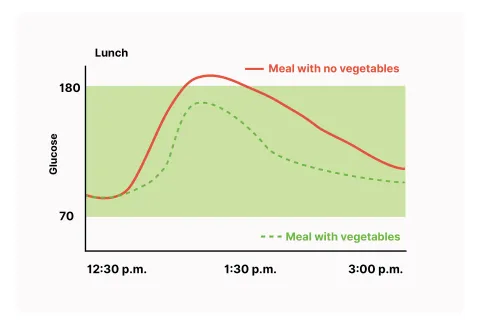
Graph: Post-lunch glucose spikes higher without vegetables (red) vs. with vegetables (green dashed).

 Maria usually has chicken thighs and white rice for lunch at noon. They each take up about half of her plate. Using her CGM, she notices that when she eats this for lunch, her glucose goes above her target range around 1:00 p.m.  

Using the Diabetes Plate, Maria changes her portions so her rice fills a quarter of the plate and the chicken thighs fill another quarter of the plate. She also adds a green salad to half the plate. Her glucose still trends up after lunch, but she is not above her target range! 


Physical Activity  

Usually, when you’re physically active, you’ll see your glucose levels go down because it improves the way insulin works and your body is using glucose for energy. Because of this, physical activity can be a great way to help you stay in your target range and the benefits last long after you’re done.  

If you’re having trouble keeping your blood glucose levels in your target range, you can try: 

  • Taking a walk before or after meals
  • Moving more and sitting less throughout the day
  • Getting about 30 minutes of physical activity five days a week (150 minutes total) and trying to make two of those sessions strength training
  • Breaking up time not moving by getting up every 30 minutes 

You can use your CGM to check your glucose before, during, and after an activity to see how it affects your glucose. Keep in mind that some activities like weightlifting or sprints cause your body to release stress hormones that can raise your glucose. Learning what types and what amount of physical activity affects your glucose can help you manage your diabetes.  

Example of Using a CGM to Understand the Impact of Activity 

Image
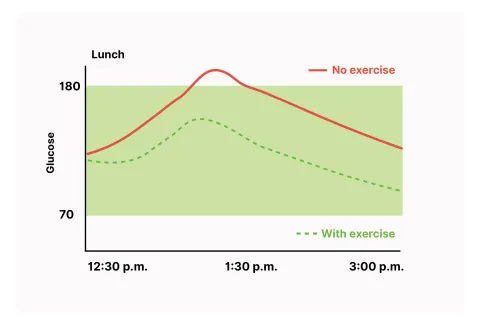
Graphic: Post-lunch glucose. Exercise (dotted line) keeps blood sugar lower, in range.

 Sara looks at her CGM and notices that every day last week her glucose went slightly above her target range after eating lunch. She decides to try walking for 15 minutes after her lunch to see if it helps. The next week, she looks back, and while her glucose still goes up after lunch, it stays in her target range.  


Medication 

You can also use your CGM to work with your doctor to make decisions about your medications. By checking your daily glucose graphs, trend arrows, and time in range, you can see if and when you are going out of your target range. This can help you and your doctor decide if you should make changes to the amount or timing of the medication you’re taking. After a change, you can use your CGM’s readings to see how it worked. 

Example of Using a CGM to Make Medication Decisions 

Using her CGM, Jasmine notices that her fasting glucose levels have been creeping up, even though she hasn’t changed her eating plan or physical activity. She has been living with type 2 diabetes for 10 years now. Her doctor talks to her about adding a new medication, but Jasmine isn’t sure she wants to. Her doctor suggests they try it and see if it works to help her reach her fasting glucose target. After starting the new medication, Jasmine looks for trends and notices her fasting glucose levels return to her target range.  She also sees her time in range increasing so she decides to stay on the new medication. 

Other Factors That Can Impact Your Glucose

Stress can make glucose levels rise and bring you out of your target range. Having diabetes can sometimes lead to high stress levels. For some, using a CGM can make it easier to manage diabetes. Your CGM can also help you see how your glucose levels change when you are stressed.  

Image
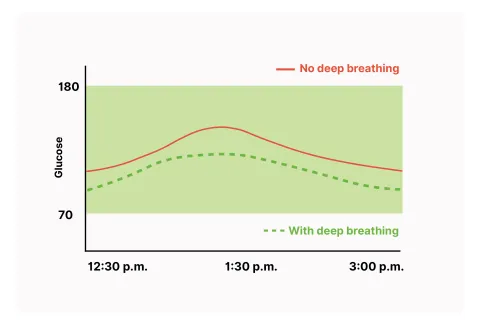
Graph: 'No deep breathing' glucose peaks high; 'With deep breathing' glucose is lower, staying in target.

 Example: José is feeling stress from managing his diabetes. Sometimes, he gets overwhelmed when he thinks about all the things he has to do to stay healthy. The next time he feels overwhelmed, his CGM alarm goes off and he sees his glucose is trending upward. José meets with a therapist and discusses ways to cope with stress. He starts breathing exercises when he feels overwhelmed to help manage his stress. Over time, he finds this helps his glucose stay steady. 

Getting seven to nine hours of good sleep each night is one of the best things you can do for your glucose to keep it more stable.  

Having low glucose at night can make it hard to get restful sleep. Using a CGM with alarms set at the right levels, adjusting your evening insulin, having a small snack if needed, and timing your physical activity can help you avoid lows and sleep better. Work with your diabetes care team to fine-tune your CGM alarms and establish a steady bedtime routine. You can also use your CGM to compare your glucose levels on days you slept well to days where you did not sleep enough and look for trends. 

When you’re sick, your body may release hormones that cause your glucose to go up. However, you may also be eating less than usual if you lose your appetite. Check your CGM regularly to see how your glucose is responding to being sick. 

Conclusion

  • Foods, beverages, physical activity, stress, sleep, and medications are all factors that contribute to changes to your glucose levels.
  • While there is no single eating pattern that works for everyone living with diabetes, the Diabetes Plate is a great place to start when making changes to what you eat and drink.
  • Simple carbs will raise glucose levels the quickest. Quality carbs will take longer to raise glucose levels, while protein and fat can help keep your levels in range by slowing the impact of food on your glucose.
  • A CGM is a great way to discover how each of the above affects you so you can make small changes to help you meet your goals.